 The book is enjoyable to read, humorous, and informative, and contains a great deal of black and white images that comprise virtually a walking tour of theatres in NY and Brooklyn.
Category: Book Reviews
Book Reviews
A review of The Kitchen Counter Cooking School by Kathleen Flinn
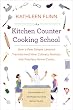 She interviewed volunteers and experts, and got to it. It pays to be a food writer, with chef friends in restaurants all over Seattle. Lessons opened with a taste test to demonstrate how the variety within one category of food. Every taste test was a revelation. The most expensive canned tomatoes were not the Best in Show. Salt substitute really is a subsitute, and a poor one. The real lesson: Trust your tastes.
A review of Wherever You Go by Joan Leegant
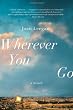 Life in a war zone is fine for the noble savages, but not for developers from Shaker heights with Harvard-bound sons. It’s easy to dismiss Mr. American Tourist as a hypocrite, but Leegant isn’t choosing sides. Aaron’s partners in crime are equally American (one is from Skokie), sentimental and easily manipulated. Mr. American Tourist may be a hypocrite, but he knows how he wants to live, and he doesn’t need anyone’s approval to do it.
A review of Tinker Tailor Soldier Sailor…the life of Colin Kerby, OAM by Jan Mitchell
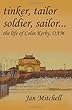 It’s an odd sort of progression from surgeon to sandwich maker and from confectioner to showman. It’s hard, at times, to believe that this is a book about one person, though there is a kind of entrepreneurial, inventor thread that links everything Kerby does.
A review of Home Front by Kristin Hannah
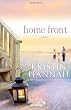 Home Front is a nail-biter from beginning to end. The descriptions of Jolene’s daily life in the military, which are likely far more horrific for a real-life soldier than what Hannah describes in the book, are both compelling and heart-wrenching. Jolene Zarkades is a fictional Army helicopter pilot, but her story reflects the all-too-real experience of servicemen and women trying to return to their families after a life-changing tour of duty.
A review of Ruth by Marlene S. Lewis
 The new social order is shown in a scene in which Ruth has dinner with three key people in her life. Similarly, the recurrent Christmas celebrations, with their associations of goodwill, peace and justice, reinforce the new spirit of harmony. Christmas, as well, serves as a good structural device to show continuity despite the passage of time.
A review of Inheritance (Inheritance Cycle, Book 4) by Christopher Paolini
 This notion of self-awareness is one that is handled delicately and with it, Paolini creates a book that is far more powerful than simply a fast-paced plot driven fantasy about a war between good and evil. Eragon’s growth is one that takes him beyond the moment of his conflict to a connectiveness with the world he lives in and beyond, through the older dragons he encounters.
A review Of Falling For Me: How I Hung Curtains, Learned to Cook, Traveled to Seville, and Fell in Love by Anna David
 What’s so endearing about Falling For Me is that David does not try to portray herself as perfect. She’s just like any other single woman out there, putting her best foot forward trying to fall in love—the only difference is, she’s working on falling in love with herself first.
A review of 270 by Vincent Ware
 When Mbala reaches his brother with two of his wives, one falls in love with him adding to their internal struggle. The differences, jealousy and dishonesty propel these two brothers into a struggle with violence of epic proportions. This was truly the best part of the book.
A review of Miss Peregrine’s Home For Peculiar Children by Ransom Riggs
 These “peculiars” are certainly fiction, right? Riggs adds another layer of “Are they or aren’t they real?” by building his story around a collection of vintage photographs included throughout the novel that show images of, well, peculiar people in peculiar poses doing peculiar things.