 A meditation on embodiment, desire, and the ineffability of language, Cohen braids scenic vignettes, text message transcripts, and literary theory with mesmerizing sensuality. She parses her insecurities covertly in iPhone transcripts where she narrates existential feelings, attachments, her own favorite body parts, and her dislike (the word “dick” is used) of Jonathan Franzen.
Category: Non fiction reviews
What Clever Friends: The Selected Letters of Jane Kenyon and Alice Mattison edited by Chad Wriglesworth
 Their acute understanding of friendship’s importance in life fuels the collection, fuels and energizes readers. Kenyon’s and Mattison’s direct prose addressing their love, care and concern for one another outshines social media likes and emojis, but that, of course, relies on the near-outdated notion of relationship intimacy. The letters now live, as Mattison and Wriglesworth note, in university archives, bequeathed by Kenyon’s husband, poet Donald Hall.
Magickal Millenials: A review of The Hermetic Order of the Golden Dawn by Felix John Taylor
 Felix John Taylor achieves a grand academic sweep of the field. His Hermetic Order of the Golden Dawn: Magic Arts and the Occult Revival is a work of prodigious scholarship, tracing in minute detail the origins, the rivalries, the infighting inherent to magickal team building.
A review of The Design of Everyday Things by Don Norman
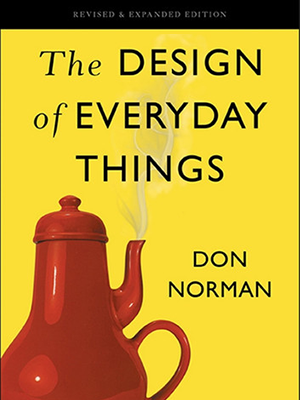 The book promises to speak to everyone but whether it does is a different question. Norman succeeds as a manifesto for designers, but falls short as a practical guide for everyone else because the examples he uses, the vocabulary within the guide, and proposed solutions to said designs are tailored to people with the power to change it – not the everyday people he claims to be writing for.
A review of The Badge Between Us by Terrence P. Dwyer
 As a New York State Trooper, Terrence Dwyer spent more than two decades involved in criminal investigations. Now a university professor of legal studies at Western Connecticut State University and an attorney consulting on law enforcement issues and the author of Homeland Security Law: Issues and Analysis, Terrence Dwyer writes with real authority on the issues of crime and policing.
A review of The Frenchmen, or My Life in Theory by Emily Eakin
 As an undergraduate during those heady years Emily Eakin was caught up in the excitement. Her The Frenchmen, or My Life in Theory, part memoir and part history of ideas, is a lively look back at that time when critical theories largely imported from France seemed poised to make a clean sweep of American intellectual life.
We Bombed in New Haven; Alamogordo, New Mexico; in Hiroshima, too: A review of Trinity by Emily Seyl
 Seyl, a science writer and editor at Los Alamos National Laboratory’s National Security Research Center, has organized a coffee table book to end all coffee table books. Trinity: An Illustrated History of the World’s First Atomic Test, replete with more than 300 carefully restored photographs, maps, blueprints, and formerly top-secret documents, goes where no book has gone before.
A review of The Land and Its People by David Sedaris
 While The Land and its People may not mark a drastic departure from Sedaris’ previous musings and ruminations, it is remains funny and engaging while, at the same time, reflecting the current state of the world in quietly amusing ways. The book begins abruptly, as if in the middle of a conversation, and ends in almost the same way, leaving the impression that it could go on and on without exhausting the reader’s appetite for his remarkable storytelling.
Literature & Me, a review essay
 I’ll admit, it ruined an enjoyable afternoon’s reading to discover that romantic notions about authorship are greater villains than late-capitalistic conglomerates with their bottom lines, unexplained cancellation of contracts, shrunken advances, nonexistent promotional plans for most books, and so on.
A review of Mother Mary Comes to Me by Arundhati Roy
 If memoir is your ticket. If you’re a sucker for a life story that only uses the crayon colours it loves best. If you wonder what kind of woman reared the author of The God of Small Things (1997 Booker winner) and The Ministry of Utmost Happiness (2017 longlist), there’s an autobiography on the shelves, calling your name. It’s time to run, not walk, to the library or bookstore and snag your copy. Tell your partner and kids you’re going offline for the next three hundred pages.