 Seyl, a science writer and editor at Los Alamos National Laboratory’s National Security Research Center, has organized a coffee table book to end all coffee table books. Trinity: An Illustrated History of the World’s First Atomic Test, replete with more than 300 carefully restored photographs, maps, blueprints, and formerly top-secret documents, goes where no book has gone before.
Category: Non fiction reviews
A review of The Land and Its People by David Sedaris
 While The Land and its People may not mark a drastic departure from Sedaris’ previous musings and ruminations, it is remains funny and engaging while, at the same time, reflecting the current state of the world in quietly amusing ways. The book begins abruptly, as if in the middle of a conversation, and ends in almost the same way, leaving the impression that it could go on and on without exhausting the reader’s appetite for his remarkable storytelling.
Literature & Me, a review essay
 I’ll admit, it ruined an enjoyable afternoon’s reading to discover that romantic notions about authorship are greater villains than late-capitalistic conglomerates with their bottom lines, unexplained cancellation of contracts, shrunken advances, nonexistent promotional plans for most books, and so on.
A review of Mother Mary Comes to Me by Arundhati Roy
 If memoir is your ticket. If you’re a sucker for a life story that only uses the crayon colours it loves best. If you wonder what kind of woman reared the author of The God of Small Things (1997 Booker winner) and The Ministry of Utmost Happiness (2017 longlist), there’s an autobiography on the shelves, calling your name. It’s time to run, not walk, to the library or bookstore and snag your copy. Tell your partner and kids you’re going offline for the next three hundred pages.
A review of Why Do I Feel This Way by Laura Mayer
 Mayer, an occupational therapist, healer, and writer based in Arizona, New York and Florence, Italy, practices healing based on personal experience. In her book she lauds the relevance of epigenetics, a relatively new approach to gene expression emphasizing the hitherto under-appreciated role of historical and behavioral components of pain, illness and suffering. Components which she and other authors increasingly demonstrate as vitally relevant to the diagnosis and management of disease.
A review of Ground to Stand On by Sandra Djwa
 Sandra Djwa’s autobiography, Ground to Stand On: A Canadian Literary Life, is like an in-depth conversation with a brilliant, accomplished new friend.) Women like myself who entered higher education in the 1960s and 1970s will identify with her struggles in male-dominated academia, and her experiences with American professors who viewed Canada as second-rate.
A review of How to Start a Residential Cleaning Business by Nats Cleaning
 What lingers after reading this book is a sense of quiet confidence. It reminds us that success does not always come from complicated ideas but from practical action, consistency, and the courage to begin. What an inspiring message for all readers, whether we want to start a new business of our own or grow our existing business.
A Review of Jazz June: A Self-Portrait in Essays by Clifford Thompson
 So, why start the collection with outer space? With a childhood self looking up to the night sky in awe? For me, the undercurrent of this book is an older narrator looking back at a young self who is perplexed by an unknown or hidden world. This makes for a relatable sensation: the older self understanding something the younger self didn’t grasp. Maybe that’s why beginning with the moons is so beautiful.
A Review of Identifying the Pathogen by Jennifer Militello
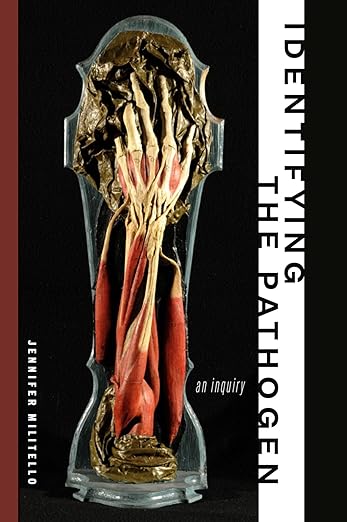 Inquisitive and morbid, this body of work breathes new life into the corpse of Anna Morandi Manzolini, a woman largely forgotten by the march of time. Militello preserves Morandi Manzolini’s cadaver with the utmost precision, refusing to let the world forget her and all women alike who have persisted in the face of systemic gender injustice.
A review of Bring Us Home From Sorrow by Joanne Fedler
 Though Bring Us Home From Sorrow is a book that moves through death and deep grief, it is expansive and even in its darkest moments, uplifting. It reminds us that none of us are alone – that we are all held in our grief by the communities we belong to and the unique forms of grief and love that everyone experiences.