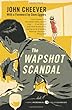
 John Cheever is a wonderful writer, and his novel The Wapshot Scandal contains observed life and imagined adventure, bringing together ancient rituals and bourgeois affections and habits, private desires and deceptions and public reputations, romance called to reconcile a reality that resists, supernatural suspicions that subvert reason, and mournful, surprisingly poetic interrogations, as Cheever examines family and communal life. The novel does not contain stories that offer easy comfort, though their intimate cruelty and sensual pleasure and melancholy do entertain.
Category: Classic Literature Reviews
The Price of Isolation: George Eliot’s Silas Marner
 It is a remarkable portrait of social misunderstanding, one that is so clear it illuminates current, similar but subtler suspicion of odd individuals in our own world. The money that Marner makes becomes important to him—obvious reward for his work. He is transformed by his isolation, his work, his money, his (often inhuman or at least unsocial) concerns: achieving independence but a spiritual withering.
Love and Cruelty and Money: Great Expectations, a novel by Charles Dickens
 It is hard to reconcile daily life and profound thought sometimes, but fiction gives us the semblance of both, reconciled. In Great Expectations, we see how shallow hopes give way to mature duties, friendship, love, and wisdom, when the little poor boy Pip gets a benefactor and a trip to London—he assumes Miss Havisham is his benefactor.
A review of The Bostonians by Henry James
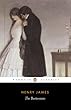 The Bostonians, a relatively early HJ novel, was published in book form in 1886. (It was originally serialized — as common in the Victorian era — in a magazine over 1885-86.) HJ was born in New York City, but took up residence in England, and had not been to the USA since about 1880. (He did not re-visit the USA until 1905.) With all the detailed descriptions of Boston, New York City, and Cape Cod, I would say that the work is a kind of tour de force, considering how many years HJ had been removed from the locales of the story. One feels very present in the 19th-century streets and landscapes that he writes about.
A review of The Return of the Thin Man by Dashiell Hammett
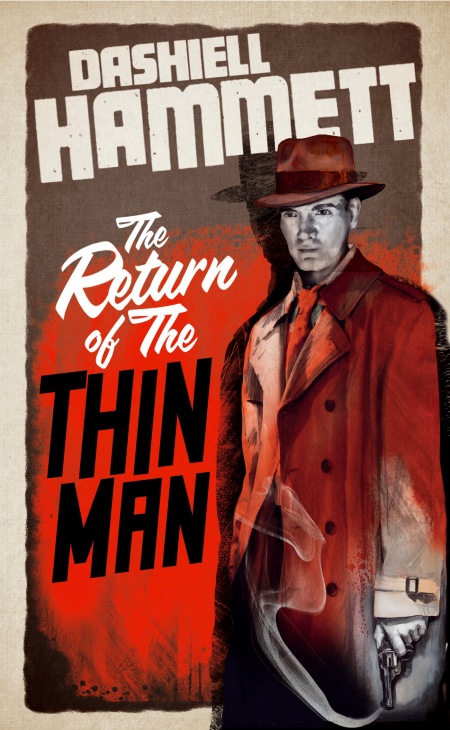 If you’re like me, you’ll want to read everything that Hammett has written, but be warned that this is not literature, simply because language doesn’t set out to do everything. Then again, screen stories like these (and The Third Man by Graham Greene is another example) are an interesting genre, primarily for what they might reveal about the writer.
A review of Appointment in Samarra by John O’Hara
 The theme that unknown and uncontrollable forces beyond and within oneself determine one’s fate is typical of the “naturalist” school of writers. Among the famous naturalist writers are Emile Zola, Thomas Hardy and Jack London, who show people as biological entities who respond to environmental forces and internal stresses that they do not fully understand and cannot control. O’Hara differs from these earlier naturalist novelists in that he lacks their social conscience, and focuses upon the wealthy, rather than the poor, but his “naturalism” is demonstrated by his blunt style and frank, brutal depiction of human interactions.
A review of Tristram Shandy by Lawrence Sterne
 It is hard to believe that Dickens was not thinking of Sterne’s novel when he began his own. Even the tie-in with the future fate of the main character is similar: Tristram Shandy laments that if his parents had considered how much depended upon their attentiveness to their task, at the moment of his conception, his life would have turned out much better.
A review of The Jungle by Upton Sinclair
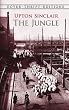 I don’t think any of the characters emerge as really unique individuals. In the case of Rudkus, I get the feeling that he is deliberately being put into as many different situations as possible, the better to elucidate all the abuses of the system. It did not seem likely, as I was reading, that one individual would really to through all of this … and the catalogue of horrors almost slips into parody at times, things being so bleak in so many different ways.
A review of The Plot Against America by Philip Roth
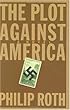 The writing is always very competent and sometimes even better than that. Lending interest is a symbolic element in the treatment of stamps (Philip collects them, they get printed with swastikas at least in his imagination, Lindbergh is an aviator who delivered air mail). There is humor, though more in individual passages than woven into the fabric of the writing (but given the nature of the story, that is perhaps understandable).
A review of Young Törless by Robert Musil
 Mathematics has a large role in this book. I’ve always had a fondness for math, but I don’t think I’ve ever seen a fuller treatment of how it could relate to other aspects of life. Take the concept of infinity. Törless had always thought of it as just a construct that one could use for certain calculations. But suddenly, he looks up at the sky and has the terrifying sensation that the sky goes on forever, “wild and annihilating”.