 Anna Karenina is a novel that beguiles and intrigues. The world it depicts and dissects remains fascinating in itself. Its characters are among the most memorable ever created. And the targets and outward forms of social disapproval may be different now to what they were then, but they nevertheless exist. The world is still an awfully harsh place to those who step out of line or who cannot enter into prescribed ways of thinking and feeling.
Category: Classic Literature Reviews
A review of The World of Yesterday by Stefan Zweig

A review of The Kiss and Other Stories by Anton Chekhov
 These classic stories have been cast in wonderfully fresh translations by Hugh Aplin. To start with, let me say that it is an attractive package overall: seven stories, an account of Chekhov’s life and his works (the plays as well as the books), a fair few photographs of Chekhov and family, and a select secondary bibliography (to which should be added Rosamund Bartlett’s outstanding biographical work Chekhov: Scenes from a Life).
Another Dodge in a System of Dodges: Evasion of Responsibility in What Maisie Knew, Book and Film
Henry James created characters able to embody his concern for elegance, intelligence, morality, and social ritual; and his work attains intellectual and spiritual dimension of a high degree—and his style, thoughtful, textured, teasing, can be complex to the point of profound obscurity, requiring attention, consideration, and deep understanding. The drama is increased for all that.
A review of Diaboliad & Notes on a Cuff by Mikhail Bulgakov
 These two handsome and distinctive paperbacks form part of a series showcasing the work of Russian Master Mikhail Bulgakov. Some of the stories in Notes on a Cuff appear in English for the first time, so this is a real treat for Bulgakovians. In addition, both books include valuable textual apparatus: photographs (Mikhail was quite the dandy), notes and a concluding section on the life and work of Bulgakov.
A review of Dark Avenues by Ivan Bunin
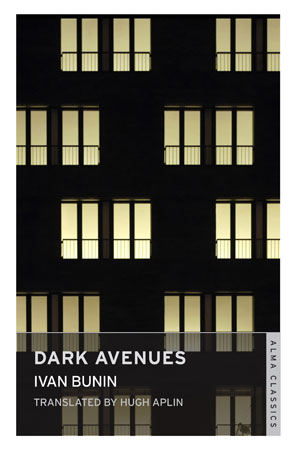 If you’re looking for a point of comparison, I’d say Bunin as a writer is similar to Chekhov, that’s his model. Though he is darker, more risqué and also narrower in his sympathies. There are some people, you feel, that Bunin is just not interested in – something you never feel with Chekhov. There are some people, you feel, that Bunin is just not interested in – something you never feel with Chekhov. Bunin is a little old-fashioned or out of touch too, you sense. Set in his ways. You read a story written in the ‘40s – and so contemporaneous with Hemingway, Waugh and Greene – and the people are behaving like turn of the century Russian nobility.
A review of The Remains of the Day by Kazuo Ishiguro
 This is a lovely, easy to read, and powerful book. The simplicity of its narrative belies a far deeper and more complex underlying truth, and this new Faber & Faber edition draws attention to how fresh and relevant the book remains to a modern audience.
On Gertrude Stein, and Tragedy and Transcendence in Stein: Writings 1903-1932
 In reading some of the description of Gertrude Stein’s life, and how she came to be an art patron—a friend to artists, an owner of their work, a facilitator of relationships—I was impressed by how intimate and simple were the lives of now famous artists, how vivid the memory. One artist spreads news of the work of another artist, Pissarro talking with others about Cezanne; or one gallerist, Vollard, introducing Cezanne, Daumier, Manet, Renoirs, and Gauguin to those who might appreciate them.
A review of Five Plays by Anton Chekhov translated by Marina Brodskaya
 What can one fruitfully add to the title, a title which accurately and ably, without undue fuss or bother, describes the book’s contents? Well, first one can expand upon it slightly. The plays in question areIvanov, The Seagull, Uncle Vanya, Three Sisters and The Cherry Orchard. So, all are what one can call Chekhov’s mature theatrical works.
Books Set in the South: Charlaine Harris’s Dead and Gone; James Wilcox’s Heavenly Days; and Tim Gautreaux’s The Next Step in the Dance
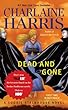 This is a genuine novel—it allows the writer to introduce us to people we would not know otherwise, and we see them struggle for love and forgiveness, for money and stability. The writer creates a vision of community that is both redemptive and convincing (I must say, it brought tears to my eyes several times: but thinking of it now, I am a bit wary of that effect). Rather than a comedy of remarriage, it is a drama of remarriage, showing the tests people must go through to know, accept, and love each other.