 Reviewed by Peter Mladinic
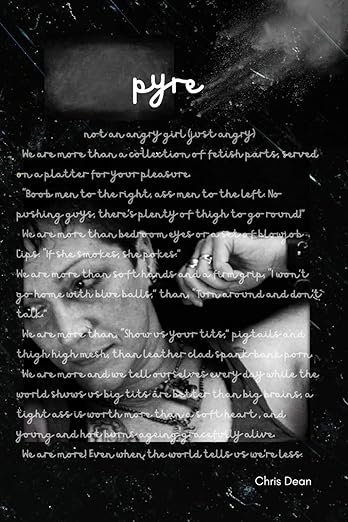
Pyre
by Chris Dean
Keeping the Flame Alive Press
Oct 2025. $13.00, ISBN-13: 979-8270825324, Paperback, 180 pages
Pyre is a book of poems divided into three sections: the match signifies mutability, the emergence of identity; the flesh signifies dignity, the demand for respect from oneself and others; and the bone signifies solidarity with the oppressed, especially women, and with others in combat against the enemies of longing and fulfillment. In the poet’s quest for the genuine, the real, and for solidarity with those who nurture life rather than destroy it, they go to the edge but not over. Some facets of society are hostile to things Chris Dean’s words represent, things such as same-sex marriage, equal rights for transexuals, and rights for people throughout the world not to have to live under dictatorships. Pyre says yes to freedom and no tyranny.
Things, places, and people change. The match chronicles changes in one person’s life, a person who learns by living not to be afraid of making a mistake and that regret, like failure, is part of being human. “We were friends. / (A one-sided experiment / that failed to pay out.)” These lines suggest advice from Shakespeare’s Polonius: “to thine own self be true.” Chris Dean goes straight to the heart, or more accurately hits on a nerve with these lines: “Do you hate me / for the silence of / an unanswered phone?” Clearly, this poet is where others have been. Their words mine emotions in their readers. They do not mince words. This beginning of “why it matters” ends in self-affirmation:
Right-wing, god-fearing Indiana clan,
Bra-burners, man-haters and uppity dikes.Women who said, “Get married, cook and clean.”
Women who said, “Fuck a family, get a life.”A god who told me to be subservient on my knees.
A goddess who said I’m whole and holy as I am.
It’s as if they are telling the children of this generation not to be afraid of the dark.
In the middle passage, the flesh, the poet’s identity as a poet and an individual constitutes a light in the darkness. The flesh is about dignity, respecting others, and respect from others. Chris Dean makes their point succinctly in the second half of “yesterday and today:”
Yesterday, I told her
anger was the force
that drove me.
The impetus behind all that I do.
Yesterday, I didn’t talk
about the fear inside of it.
That if I’m content
I will cease to be me.
Today, I woke to a storm breaking.
It soothed me to know
nature’s rage
could equal my own.
In poetry, lines move through a pattern, these lines, eloquent in their clarity and directness. It’s as if the poet looks out a window at a wind-rocked tree on a hill their reader sees too.
In the book’s third part, the bone, one line appears, engulfed in white space: “And still, we dance.” The word “still” suggests what “we” are up against. Enemies of longing and fulfillment, people who would start a fire and burn this book in it. Someone said “United we stand, divided we fall.” Someone else said “To speak is to act.” We act against forces that seek to divide, limit, restrict. “the fence” paints a rural scene: a house, a dog at a fence, and, beyond the fence, a stretch of land. The poet says, “The illusions of boundaries / keeps us snug in our lives.” It’s as if they are telling themselves and their readers not to be complacent, in the face of an enemy who tries to tell people what to think, how to feel, and what to do. “old ladies and looms” is about making things to be of use; it’s about continuity, a mother’s skill passed on to her daughter. “I’d sit with my knitting, / watching her cut away stiff seams.” This is working together, learning by example, positive things, needed today as suggested by the poem’s beginning:
I look at headlines
and words jump off the page:
ripped, divided, torn
…and I think about my mother.
I walk to work
past throw-away people
life used harshly before using them up
…and I think about her loom.
Slavery exists, and this poet knows it. “Throw-away lives” is the very thing Chris Dean is combatting to eradicate. Right now, there are North Korean women in a Chinese fish factory who are, in fact, slaves. They are the many making a profit for the few, and any means justify the ends. This is the deplorable thing this poet is fighting against, this and other oppressions elsewhere. To speak is to act. Read Pyre, poems about surviving and thriving.
About the reviewer: Peter Mladinic’s most recent book of poems, The Whitestone Bridge, is available from Anxiety Press. An animal rights advocate, he lives in Hobbs, New Mexico.