 Reviewed by Magdalena Ball
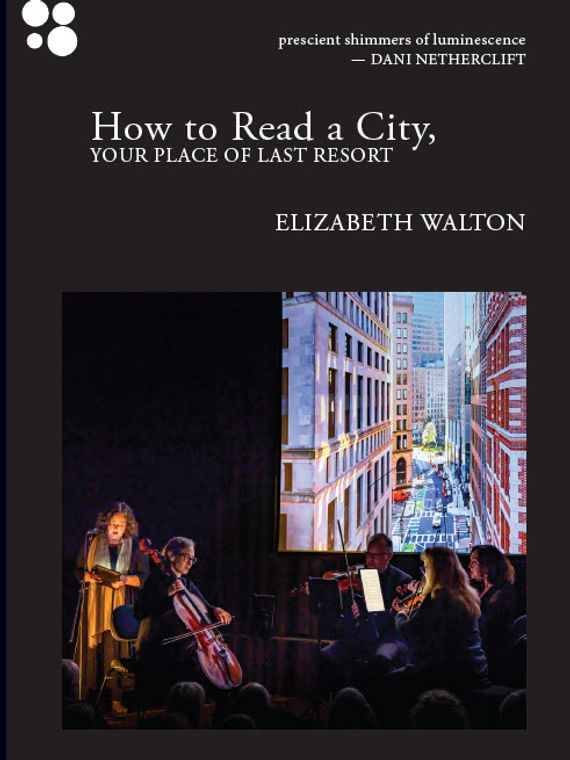
How to Read a City
Your Place of Last Resort
By Elizabeth Walton
Five Islands Press
Paperback, March 2026, 52 Pages, ISBN: 9781923248199
Elizabeth Walton’s How to Read a City opens with the 2019 and 2020 Black Summer bushfires, the several-months-long drama that most readers will remember all-too-well. This was such a tangible evidence of Anthropogenic climate change which ended in Covid lockdowns. The “Evacuee Diary” is the right introduction to a journey through an increasingly fragile landscape. The poem, presented as a prologue, creates motion across the page in hours that become weeks, a progression of crises that Walton captures perfectly with breathless writing that takes the form of a stream-of-consciousness prose poem:
Week 3 week 4: still sleeping in car/a day at home now and then before flames take off again/army reserves arrive and newbie evacuees/antiques strapped to cars/evacuation chic: flowing kaftans, heirloom jewels and so many questions—why the masks, why the scarves, why all the long faces/Too soon for the blackness that will run from the nose/
There are five sections that follow “Evacuee Diary”: Fly, Submerge, Ground, Personalise, and Renew. Each of these begins with brief excerpts from a range of climate change reports including the CSIRO and Bureau of Meteorology’s State of Climate 2024, The IPCC, the WWF Living Planet Report, and even a magazine article in Nature Cities on Green Roofs. These epigraphs connect to tell an irrefutable story of sea rise and warming atmosphere. Between these scientific blocks are poems that take a very different approach. These are sensual, exploring human frailty and hunger against their environmental impact, from the plastic laden (but delicious) sous-vide “polyester threading this inky harbour” or the missing landscape and garbage strewn concrete (“crushed cans of XXXX,/Great Nortern and tradie plastic (“When to Book a Chin Wax”).
In spite of its intense subject matter, the work is often lighthearted and humorous, from the maze-like poem of “Ikea Tempe” (which will resonate with anyone who has visited this or any large Ikea) or the 28,000 toy ducks, beavers, turtles and frogs that spilled from a ship into the North Pacific In 1992:
I’d like to know what friendlyjordies will say in
2027 as those cute little puddle-duckies drift all the
way to Alaska, clinging to ice-drift like the lost white
bears. And when I am 83, their small golden faces will
Smile at me, as I swim in teh Amundsen Sea, and I will
say, well, hello Duckie, what took you so long! How the
bloody hell are you!
The book contains a series of pavanes titled “Pavane for a Dying Planet in Four Protective Spells”. I have only ever seen/heard pavanes in music and dance, and they work beautifully here, creating a melancholic feel with repeated phrases, sonic wordplay with lots of sibilance and assonance and rich visual structures that create motion while providing an incantatory rhythm. These pieces are both whimsical, with words that swivel and curlycue around the page and moving, a powerful mix that connects into a single series across the book through the wings of sea eagles, the tarwhine, an estuary fish, The Twining Glycine, a creeping plant, and the Spotted Gum, which links back to the Tarwhine:
Peu a
peu, she sends dried leaves downstream, murmuring and
restrained. In her trance, she does not hear the chainsaws
arrive. She does not hear them leave. La fa la sol la. Ti-da.
When it rain, the puddle-ink is washed down the creek
to join the tarwhines in the sea.
The poems in How to Read a City feel urgent to me, speaking as they do of ecological destruction and complicity. The elegiac feel is so delicately contrasted with the many musical resonances and the inherent call to take note of the beauty and joy that is still with us, however endangered. Everything “is a work of art”, and the final poem in the collection, “Soil Punk City”, makes clear, there is always a hope of renewal in urban regeneration in soil, planing, leaning to work together:
Repair. Here we scatter cosmos
because it is food for bees.
Loam under nail,
we listen
to the Soil Punk Gospel
and float Burramatta with hope.
At only forty pages, How to Read a City is a short book, part of the 5 Islands Shorts series, but it is a book with big impact. These poems read beautifully on the page and can also be heard transformed in a stunning musical collaboration with Richard Lawson and the Acacia Quartet on iTunes: https://open.spotify.com/album/73DLipyXA5EUeX59OU8liu?si=1GEEUyywTXmWHVSvEJNDJg