 One of the book’s strongest features is its straightforward structure. It doesn’t assume readers have business experience or a large budget. Instead, it walks through how to launch with minimal investment and begin earning quickly—framing early traction as a confidence-builder and a way to reinvest into the business.
Category: Non fiction reviews
A review of My Little Donkey and Other Essays by Martha Cooley
 In clean, unaffected and polished prose, Cooley invites us into her world, and many of her essays follow a braided structure that pull together threads on people, animals, age and aging, accidents, and flukes and family, as well as other moments worthy of reflection. But Cooley doesn’t limit herself to braided threads. Two of her essays deploy a flash-like form in ideas and well-researched facts that seem unrelated and dot the page – until they kaleidoscopically connect.
A review of Wild Inside by Kathleen Lockyer
 Wild Inside is a thoughtful, gentle call to parents to be present with their children from their earliest years, to make “meaning of our childhoods and our parenting journey” through the “most ordinary moments” of tactile, intimate engagement with the natural world. This is because what people do, what they are occupied with, wires their brains. Through tactile, visual, and auditory experience, we learn to make predictions, make connections, and bring our observations into context.
A review of Shirley Clarke: Thinking Through Movement by Karen Pearlman
 Shirley Clarke: Thinking Through Movement explores many of Clarke’s films in depth, showing the ways in which she uses situation, context, space, time, real vs scripted life, and a networked and collaborative approach to working that focuses on the filming process itself as the main point of creativity rather than a pre-conceived plan. The result is a powerful way of looking at dance and filmmaking that can be applied to any kind of artistic endeavour.
A review of Sir Thomas Browne: The Opium of Time By Gavin Francis
 Francis’ impeccable prose style takes us into the cinematic tour de force of the time and ideas of Sir Thomas Browne that make us appreciate the world we live in with specialized medicine and technological advances. At the same time make us weary of the future by ending on the subject of mortality.
An interview with by Sahar Swidan and Matthew Bennett
 The authors of Mastering Chronic Pain talk about their new book and why they wrote it, the importance of empowering readers, biggest misconceptions about pian, how they began collaborating and what makes for a succesful collaboration, what’s in the pipeline and more.
A review of How to Write a Novel edited by Aaron Burch
 The beauty of How to Write a Novel is two-fold. First, all of its readers will walk away having learned something about writing, even if they don’t mean to. Second, its readers will walk away wanting to write and revise something, which is the mark of a good teacher, good workshop, good craft book. Editor Aaron Burch and his friends challenge readers to consider their own hobbies and how the principles behind them relate to writing. After closing the book, I wondered, what does writing have in common with volleyball? Or Pokémon? Or singing? Or video editing? I knew I had to write in order to find out.
A review of Sodomy’s Solicitations by Joseph J. Fischel
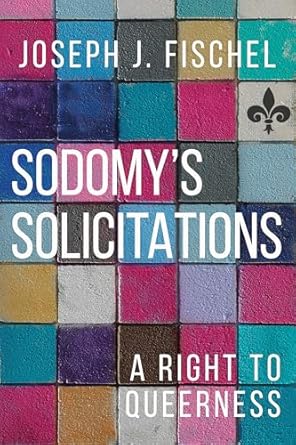 The book is erudite, playful at times, and well-argued. But whether these two relatively straight-forward propositions require so much theorizing and intricate prose is debatable, at least outside the groves of academe, where the author writes from a perch at Yale. One can imagine functionaries in the current White House looking at this book and immediately barking out orders to cut federal funding for New Haven.
A review of Ingenious: A Biography of Benjamin Franklin, Scientist by Richard Munson
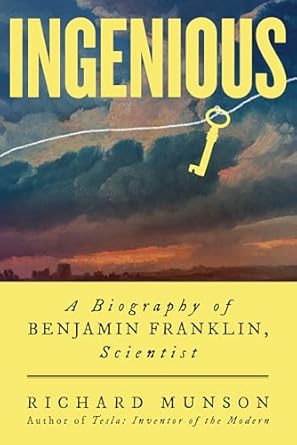 Throughout this biography, Munson makes clear that Franklin’s scientific engagement with the world is a perpetual touchstone. No matter where he is on the planet—striving in his early life in the states, representing the states in England, working as a wartime ambassador in France, or traversing the ocean in between—Franklin is continuously scientifically inquisitive, continuously meeting and corresponding with other investigators, continuously inventing, and continuously devising and refining experiments.
A review of Exiles in New York City by Philip T. Yanos
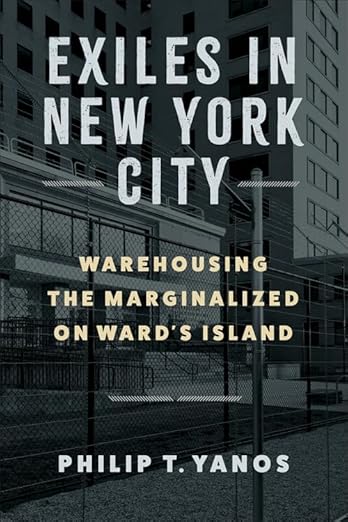 One thing is clear: deep journalistic inquiry, such as Yanos’ Exiles in New York City, sheds much-needed light on a social morass that has been with us far too long. His reportorial zest, coupled with an inspiring sense of humanity and deep inquiry, is present on every page of this eye-opening book. This is a book about how we choose to live now, even when some of our lives are sequestered, shaded from prying eyes behind a meshwork of barbed wire fence.