 Reviewed by Magdalena Ball
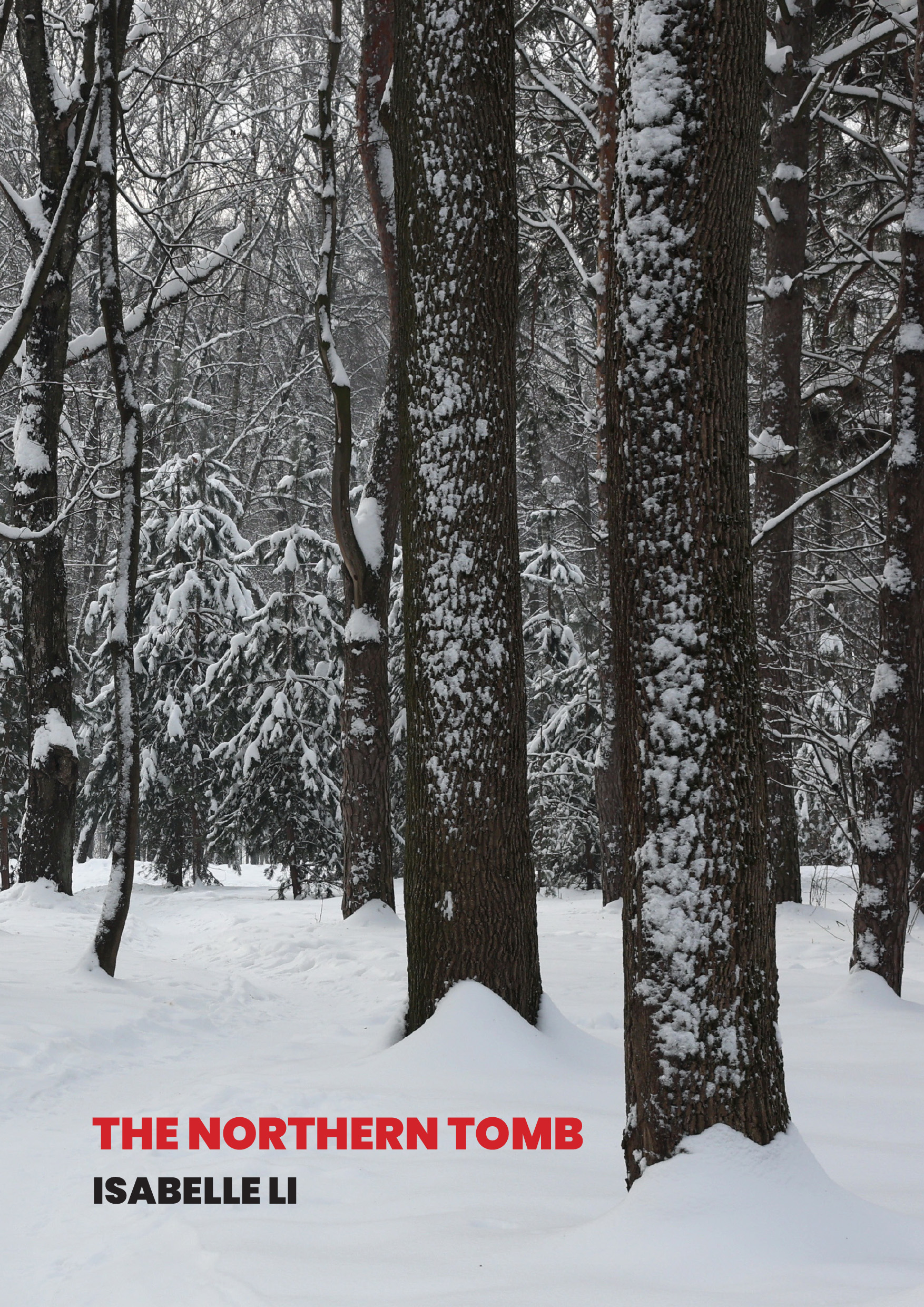
The Northern Tomb
by Isabelle Li
Puncher & Wattmann
Paperback, ISBN: 9781923099821, May 2026, A$32.95
Although set primarily during the Covid pandemic, Isabelle Li’s novel, The Northern Tomb, isn’t a pandemic novel per se. It’s very much character driven, with each key character narrating their own section. These voices overlap in ways with repeated motifs around loss, memory, care and history which mirror a four-movement sonata. Each of the three narrative voices works in harmony as the story progresses The story builds through time, history and the social context of their overlapping lives as they move through these varying narrative perspectives in ways that are quietly powerful.
There is Mr Zhao, an elderly and infirm widower whose wife died a few years before the book’s present day setting, and his carer Sister Fu, a middle-aged women who has also lost her husband some twenty-three years prior. The two end up isolated together at the height of the Covid pandemic in Shenyang, a city in Northeast China. There is also Mr Zhao’s son, Jr, who is incarcerated at the age of eighteen in the Great North Prison after being involved in a street fight during the Severe Strike Anti-crime campaign in 1983. These three voices are distinct, but they weave their way apart and together as they begin to coalesce in the final chapter, which returns, like a refrain, to Sister Fu’s voice. Sister Fu’s calm and careful observations take us through her traumatic history, the ways in which she meets and comes to care for Mr Zhao after working as a hospital cleaner, her relationship with her son Dawei, a computer engineer who becomes stranded in Wuhan during the pandemic. Li writes with beautiful economy, packing a lot of information into what feels like almost offhand observations:
Three days later the Novel Coronavirus Infected Pneumonia Epidemic was made official, and the Premier was tasked with tackling it. He had a senior engineer’s serious square face and tinted square glasses suited for the outdoors, waving his right hand rhythmically like a Peking dialect storyteller striking an invisible drum. (58)
In spite of the extraordinary circumstances, there’s a ordinariness to the lives of these people as they go about their day, Sister Fu shops at the market and cooks delicious sounding meals for herself and Mr Zhao, teaches herself to sew clothes, and learns to massage Mr Zao’s many aches, pains and maladies. Mr Zhao shares stories from his own history, attempting to “remember the past truthfully”. As was born in 1934, his memories traverse much of China’s modern history from the invasion of Manchukuo by Stalin to the “Restoration” (Guangfu) of Taiwan to China following Japan’s surrender in World War II, recruitment for the People’s Liberation Army, and the Great Famine under Chairman Mao from 1959 to 61. There are many such vignettes which are recounted in the context of the pair’s domestic lives, a powerful parallel that makes the past feel human rather than abstract.
There is a tenderness between these two, their shared grief, their small joys and resignations, and a kind of respectful dignity between them as they sing together or to their dead loved ones, create a book of poetry (“antithetic couplets”) together – a classic Chinese form that mirrors the narrative, and go for around the apartment. Mr Zhao neglected his wife during her illness, and his son Jr resents him for it. His two daughters, minor characters in the narrative, live overseas, one in London and one in Australia, and they are in contact with him regularly. Sister Fu takes him as she finds him, and in spite of a little grouchiness associated with his many ailments, he comes across as an appealing character whose poetic and sometimes humorous recollections transcend nostalgia, focusing on what he has lost and what he still carries:
Most of my old friends had died, a sad reality in my advanced age. I’d stopped attending their funerals because my dead friends had lived on, filling up the space around me in quiet moments. We’d talk and joke, argue and agree, playing out endless drama, our chuckling brightening up the nights like match flames. Friendship had been a definitive highlight of my life. Despite al. my failings I’d been a passionate, good friend. (99)
The third section belongs to Jr. Jr’s pointed recollections of his prison time where he learned many skills and made important connections, is told as a flashback to an interested student. This is contrasted with the joy he takes in his present-day time with his twin children, Little Poplar and Little Pine, as they play at the beach, go to school, fight and play with one another, eat and read stories and quote classic Chinese poetry. Throughout the book, there is a sense that the real life is in these moments of joy that pass quickly, like our lives, with history providing more of a backdrop. The philosophical perspective is subtly handled in Jr’s point of view:
History rushes forward without our knowledge. We can’t see the big picture and have little control over our individual or collective destiny. To not be swept away by the mighty torrent, we occupy and anchor ourselves with quotidian duties, feeding our loved ones like I did, or keeping them warm as Abacus had done. (158)
The book concludes with Sister Fu again as she navigates Covid following the end of lockdowns, Mr Zhao’s decline, and continued deterioration of his relationship with Jr. This last section returns Sister Fu to the hospital where she remains measured throughout, her kindness coupled with a sense always of the larger picture that picks up on both Jr’s and Mr Zhao’s philosophies: connection, history, and the way that time undoes the struggles of life. There is a beautiful sense of timelessness in Li’s prose as the past is conjured again and again interspersing and reconfiguring memory into the present:
I looked through the windowless walls to the north. In my hometown every autumn wild geese would migrate south in huge flocks. Taking off, they flew so high into a vertical sky. I’d hold my little sister’s hand and run after them against the warm wind. We ran and ran in the endless fields, until we were breathless, until my little sister collapsed, until the birds became a thin black line disappearing into the horizon, leaving us behind, unable to escape. (203)
The Northern Tomb perfectly encapsulates the inner and outer lives of its characters and the way in which the personal bisects the universal. It’s a lovely book, pithy and delicate.