 Reviewed by Catherine Parnell
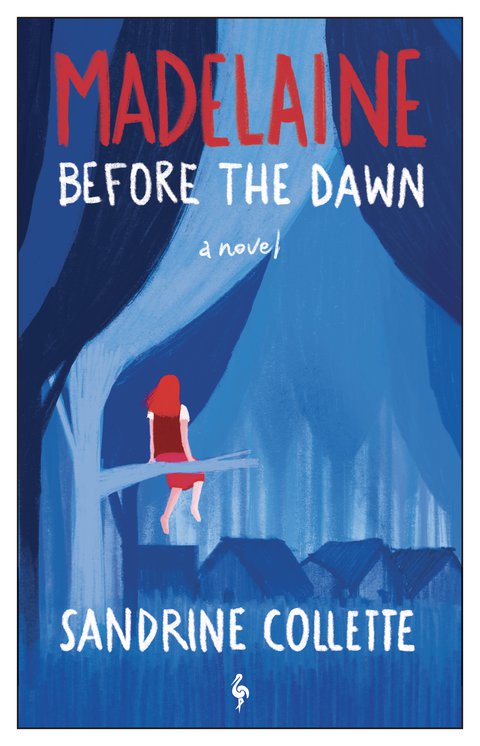
Madelaine Before the Dawn
by Sandrine Collette
translated from the French by Alison Anderson
Europa Editions
March 2026, ISBN: 9798889661726, 176 pages
A ferocious novel, Madelaine Before the Dawn by Sandrine Collette, translated from the French by Alison Anderson, gives full-throated voice to a starving yet resilient young girl who’s taken in by the inhabitants of three farmhouses situated on a place called the Rise. The country is France, the era is unspecified, but it need not be – it’s a land of backbreaking labor, farmers and masters. Twin sisters Ambre and Aelis marry (respectively) Leon and Eugene, but Ambre is childless while Aelis gives birth to three boys. Rose is an herbalist who lives in the third farmhouse with young Bran. Madelaine is adopted by Ambre and Leon, yet she belongs to all of them. They are family.
But weather dominates, and the master and his son, the aristocracy if you will, rule. There’s no crossing them, especially the rapist son, who rides the countryside on his gray horse, trampling tender fields, violating women. “Afterwards, the women who have been raped smooth their homespun dresses and rub a cloth over their soiled bodies.” The sisters know to hide when the son is on the loose. Madelaine learns. And “When a child is born that resembles the Son, the family keep their mouths shut and kill the infant the following night.” Such, such is the fury and rage that emerges from the silence blanketing the rapes, about which no one speaks.
The resentment festers and grows with time, yet the villagers know there’s little to be done except work for survival. Madelaine is indefatigable in the fields and mysteriously skilled with an axe. It’s no paradise – that is for the master and his son, who have plenty to eat and shelter from the elements. One day during a time of starvation Madelaine accidently kills a stag on the master’s property, a forbidden act, yet Eugene, the father figure to all, conceals the crime and butchers the stag. Those on the Rise eat meat, a rarity unless you count small birds and rodents. The roasting and disposal of the stag may be hidden, but the families have tasted … the forbidden fruit. The paradise that never was will be lost.
The plot is simple, but in Collette’s hands, and Anderson’s translation, the prose soars, delivering shimmering men, women and children caught in a never-ending cycle of labor in fields. Hope rises and falls. And while love is a luxury, it’s as seeded in the novel as the seeds the farmers plant in their fields.
Collette’s novel parallels much in the current time and events, where women and girls are for the entitled’s pleasure, work results in more work, health is constantly risked, and death changes everything and nothing. Madelaine, so unlike those in her family and community, possesses a strength that alternately threatens and ensures her survival. She is defiant and devoted to her family, but she knows “how fragile they are.” Madelaine Before the Dawn is a brilliant social novel, a stern exploration of class divisions and structure, and the role women play. But wait for it. The time will come when Madelaine confronts the norm – when all of us fight the system – and as Walt Whitman wrote, “The Axe leaps!”
About the reviewer: Catherine Parnell is a writer, editor, educator, and the Director of Publicity for Arrowsmith Press. She is co-founder of MicroLit and serves on the board of Wrath-Bearing Tree. Her publications include the memoir The Kingdom of His Will, as well as stories, essays, and reviews and interviews in Reckon Review, Compulsive Reader, Five on the Fifth, LEON Literary Review, Cutleaf, Funicular, Litro, Heavy Feather Review, Mud Season Review, Emerge, Orca, West Trade Review, Tenderly, Cleaver, Free State Review, The Brooklyn Rail, The Rumpus, The Southampton Review, The Baltimore Review, and other literary magazines.