 Interview by Rachael Brandt
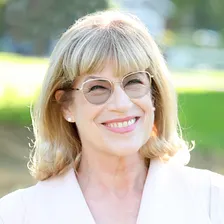
The following is an interview of author, Tess Perko, by her daughter, Rachael Brandt. Tess’s debut novel, Learning to Whistle: A Novel, about a young woman who loses her mother to breast cancer comes out April 7, 2026.
On your website, you state that you’re committed to writing stories that empower women. What has inspired you to focus on this in particular?
Well, I was born with a strong sense of self-worth, but, as you know, your grandfather was a staunch Catholic and authoritarian. His views often made me feel like a second-class citizen. For example, he preached that women should obey men and that their major goal should be to get married. When I left home, I decided to follow my own path despite his objections. I got a college degree which I paid for with grants and money from jobs, and I started a career. Finally, I got married and had you and your brother, Alex. I didn’t want you to experience what I had. I don’t want any woman to experience discrimination and low self-worth, so my writing focuses on empowerment.
Learning to Whistle focuses on a college-age woman who loses her mother to breast cancer and who flees to South America to try to escape her grief. What was your inspiration for this story?
My mother died in December 2020 on the day that I retired as an English professor at Diablo Valley College. I began to write this story in January 2021 while I was still grieving and strongly felt her loss. This experience helped me write about someone who lost her mother.
In addition, when you were in college, I was diagnosed with breast cancer and underwent chemotherapy for four months. When you graduated, you went to live in Argentina for two years and regularly video-called me to tell me about your adventures. This is not your story, but you were my inspiration for Leonie, the protagonist in my book.
Can you describe the process you used to write this story?
Tess: Before I wrote this novel, I had published non-fiction, short stories, and poetry. I had read books on how to write a novel, but I didn’t have a clear understanding how to go about it. So, I decided to just begin. I wrote a story of about three hundred pages and asked one of my writer friends to critique it.
My friend pointed out that I had two stories going on, and she lent me a book about how to write a screen play. This led me to buy the book Save the Cat! Writes a Novel. I read the book cover to cover and gained a better understanding of what to do. So, I rewrote my novel focusing on Leonie grieving for her mother. My editor helped me restructure the novel to make it more compelling.
So, you didn’t use an outline to write your book. If you write another novel, what do you think your process will be?
I’m already writing my second novel, and I haven’t created a detailed outline. I read that Stephen King never outlines his stories either. Before I write, I spend a lot of time thinking. I gather ideas from all different places such as friends’ experiences, the news, or books that I read. I make a list of ideas so I don’t forget anything. I may outline certain chapters, but often the chapter takes a different turn that what I first imagined. Ideas come to me as I’m typing, and I let them flow from my brain onto the page through my fingers.
Do you have any routines or rituals that you adhere to while you’re writing that facilitate your process and creativity. What are they?
When I’m in the middle of a story, I begin my writing session by rereading a previous chapter of the book so I can immerse myself into the story before I continue.
Atmosphere is important when I write. I sit at an old oak desk in my library under a window looking out to my back garden. I type on a keyboard that’s attached to a large computer screen. When I take breaks, I gaze at the flowers and garden statues in the yard.
My library has a wall of bookcases filled with books and inspirational art. Remember that cartoon picture of a writer that you gave me once? I’ve got it framed and it sits on a shelf looking over me as I write. I also have a Native American storyteller doll telling a story to eight children sitting in her lap. I have a metal sculpture given to me by a good friend of an African woman reading a book. At the White Elephant Sale in Oakland last year, I bought a statue of a young girl writing in a journal. Now that sculpture sits on a top shelf in my library.
Before you taught college English, you worked as a CPA. Do you think your eleven years of experience in this field developed your writing in any particular way?
Yes, I do. Before I worked as a CPA, my writing was overly descriptive; I used too many adjectives. As a CPA, I had to write succinct specific factual language. After years of practice, my writing developed as more focused and detailed.
What is the hardest part of writing a novel?
Developing plot is hard for me. I’m a natural problem solver, but in plot development, a writer must create problems for the characters. I’ve had to practice hard to do this.
The other hard part of writing is developing a character’s thoughts where she mulls over problems and eventually solves them.
Is there a story that’s currently sparking your imagination? What can readers expect from you next?
My next novel is set in Alaska. It’s about a young woman who is trying to build up her self esteem after being raised by an authoritarian father. I derived the idea from some of my own personal experience.
Meanwhile, I’m always searching for ideas for more stories.
Tess’s debut novel, Learning to Whistle: A Novel, will be published by She Writes Press in April, 2026.
In 2025 and 2024, the General Federation of Women’s Clubs Creative Arts Contest awarded Tess First Place for her short stories “Park Avenue Romance” and “Rain.” Her short fiction has appeared in Grigg’s Anthology: Joe Bellino’s Thighs, Grigg’s Anthology: Daylight Song, and Alamo Women’s Club The Leaf. Running Deer Press of Santa Cruz and the Danville Area Cultural Alliance Society of Poets have published her poetry.
When Tess is not writing, she raises money for scholarships for college and vocational students, teaches essay and journaling workshops to emancipated foster youth, studies Spanish, and grows beautiful roses.
Website: tessperko.com
Blog: https://wordpress.com/home/tess-perk-o.blog
Facebook: https://www.facebook.com/profile.php?id=61579883794249