 Interview by Jennifer Bannan
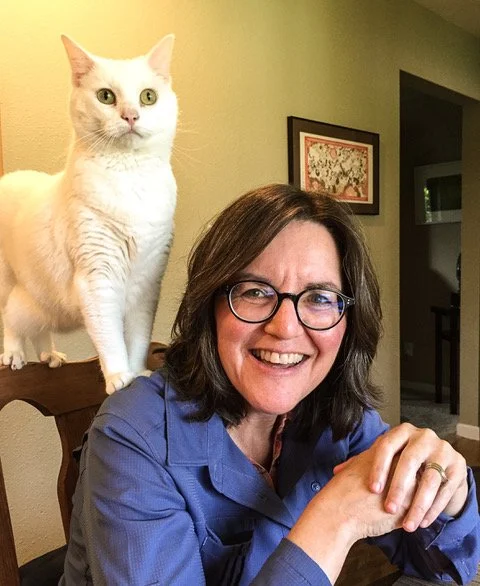
I recently had a talk with R. L. Maizes, the acclaimed author of A Complete Fiction (Ig Publishing, Nov. 2025), about writing full characters, writing about writing, and tackling topics like feminism that not every publisher wants to touch.
Maizes’ novel is a delight, part satire and part honest yearning of author characters working to get their expressions into the world, in an increasingly transaction-based culture. Her handling of social media is a wonderfully imaginative takedown of the tech and branding ecosystems. In addition to these topics, our conversation also touched on the writing process, the importance of revision, and why reading is one of the few hopes we have that oppressive power dynamics can be understood and someday remedied. A Complete Fiction just won the Colorado Book Award, General Fiction category.
Among other themes and plotlines, your book is about the difficulties the protagonists have selling a book with a #MeToo theme. It’s interesting to me that your agent worked 18 months to sell A Complete Fiction, a delay that seems to corroborate the concept of #MeToo as a no-fly zone. Why do you think publishers might shy away from the theme?
They’re going to have to live with the project for a couple of years. And a lot of people may have their own #MeToo experience that causes them pain, so they may not want to sit with it for such a long time. The right editor would be someone lucky to avoid such an experience or someone who has worked through it sufficiently so that it doesn’t trigger them.
So you took it back from your agent for a second look.
Reading it over, I realized I was satirizing cancel culture, satirizing the writing world, but I’d played it pretty straight with social media, just playing out the drama over Twitter. So I created a new social platform, Crave. And I tightened the scenes. Made some funnier. It took me about six months to do the rewrite, but then it was snapped up in two weeks.
Did you worry it was possible the book would be passed over because of what it revealed about the publishing world?
I was not worried about satirizing publishing because it’s fiction. I’m a former lawyer, so I’m very careful about real life commentary. I don’t even text my friends to talk about being annoyed with the publishing business. But when it’s fiction, someone may disagree with it but, it’s fiction. I was very worried about writing about writing. Publishers and agents say don’t do it. But I think the writing chooses the author.
The story is in large part about other people’s stories, and the issue of proper handling. Both characters make some mistakes here, so you must have thought about an author’s responsibility to people whose stories they use. Are there some basic rules?
It depends on the context. If I read a story in the newspaper, I have no responsibility. But if it’s someone I have a relationship with, who trusts in me, like a teacher or friend, I would be much more careful. Another part of the context is in how much the writer changed the details. Is it set in another town? Did the writer change the gender of the main character? If you changed it enough that even the person couldn’t recognize, then you’re fine. The more you change it, the more it becomes a product of your imagination.
“Not good enough to publish but good enough to steal?” I love that line that PJ sends to George, who worked at a small publishing house that had turned down PJ’s #MeToo novel. She’s responding to a one-paragraph description of his book, which also has #MeToo themes. She’s jumped to a lot of conclusions, and so the story takes off. Was this the starting place for your novel or did the beginnings of the idea start in another theme, character or situation covered in the book?
The starting place for the novel for me was a sense of aggravation seeing writers getting taken down on social media for doing what writers are supposed to do, writing stories. Before you go after a writer, maybe read the book. There were so many of these types of stories, of authors getting called out for telling a story that wasn’t theirs, or telling it in an objectionable way, and I don’t mean writing style, but rather the message they were conveying. All together they were an inspiration. It’s fair to say if you think a writer doesn’t write well. But often it came down to personal attacks about chosen subject matter.
I love growth stories. They give me hope that I can grow. So, in order to allow a character to grow the writer has to start somewhere where some readers will describe the character as unlikable. PJ – being impulsive and throwing out an accusation about a book she hadn’t even read –this set up gives her a lot of room for growth. Still in early drafts I had readers tell me she was too annoying. “I like George so much better,” people would say. I had to figure out ways to make her more likable along the way. I gave her some nerdy hang-ups and her friendship with Marissa to help with that.
I liked the two perspectives of PJ and George. They were satisfyingly complementary as characters. What’s the hardest thing about writing a novel from two POVs?
I wanted PJ and George to be balanced, to both be round characters. My aim was for the reader to be rooting for both while disagreeing with some of the actions or thoughts of both. It was difficult to achieve at first. PJ was too much a villain. George was too passive. I wanted him to have agency because a character without agency doesn’t usually work in a novel.
The book relies very much on dialogue. This gives it a great pace and character-driven quality. What was it about this book that felt it needed to be told in the voices and conversations of these characters?
With writing dialogue, I think a little bit I was playing to my strengths. Also I will say that I have a dream, or fantasy, of writing a play. I grew up in New York going to Wendy Wasserstein and I so admired how she could take you from laughing to weeping to laughing again. That facility was phenomenal and she wrote a lot about feminist themes too. She may be one of the reasons I became a writer. Wasserstein was both funny and thoughtful.
Instead of using existing apps like FB or Twitter, you made up one: Crave. It’s an ingeniously branded app with all the gimmicks. Do you use social media?
Social media drives me crazy. It’s destroying democracy. It’s making young people and old people depressed and sometimes suicidal. I’m on social because I have to use it to get word out about my book. I also use it to discover books. I don’t know how we’re going to fix democracy with an algorithm that reinforces a lot of things you believe that aren’t true. Neighbors, even people in the same household, getting unvetted facts and totally different feeds – no wonder it’s tearing apart community-mindedness. There were always wealthy people using propaganda in newspapers but not to this extent.
I’ve recently been seeing on social media this idea that older women’s stories are having their day, but I’m skeptical. Maybe they’re just gaslighting, as in “older women rock, yes they do!” so they can then move on quickly to more patriarchy-friendly storylines.
Wouldn’t it be great to read a headline that “male stories are having their day?” They’re always having their day whether or not older females are finally getting a few books published. I think everyone should read about the perspectives of older women.
A Complete Fiction takes place on the backdrop of a non-reading culture. Friends, on-air reporters are saying they don’t read or they don’t have time to read. I’ve heard hypotheses that the lack of reading can account for #MeToo scenarios, for our general lack of compassion for each other. Thoughts on this or generally the impact of non-reading?
Reading is a lifeline for me. I feel sad that people don’t have access to that. I do think that reading, especially well-developed characters, helps people develop their own character. Sexism, racism, classism – these exist because we aren’t working on our character, on our empathy. Cancel culture connects to this empathy problem. It’s so much easier to say something nasty when you don’t see consequences for your actions, don’t know the reaction of the person you’ve taken down.
I’ve been enjoying your short stories too, which have some differences from your novel, but are similar in the ways the characters try hard and often screw up in hilarious ways. Thanks for your very human characters and for this interview.
Thank you.
About the interviewer: Jennifer Bannan’s latest short story collection, Tamiami Train: Miami Stories, was released in the Fall of 2025, was included in the Best of Oct. 2025 by the Southern Review of Books, has received excellent reviews in The Library Journal and Foreward Reviews, and was named a finalist in the Eyelands International Awards. Her first collection, Inventing Victor, also from Carnegie Mellon University Press, was published in 2003. She has had stories in the Autumn House Press anthology, Keeping the Wolves at Bay, and in literary journals including the Kenyon Review online, ACM, Passages North, Chicago Quarterly Review, Exposition Review, Eclectica Magazine and more. More about the author at jenniferbannan.com.