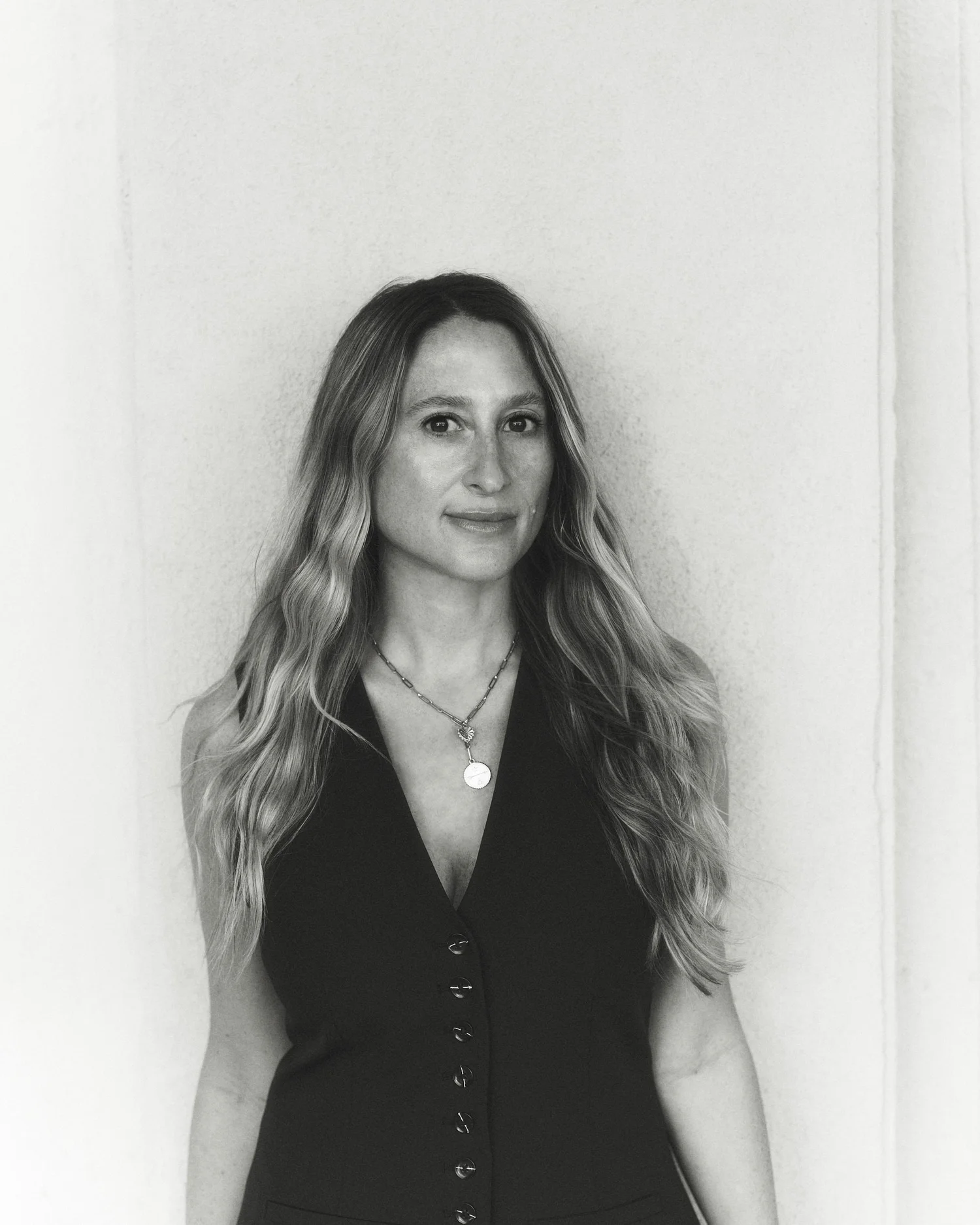
 You’ve been a fashion executive, the creator of Misterkrisp, and now a novelist. How do you understand your creative transition across these very different fields?

Looks Perfect published by Little A; October 6, 2026
My creative journey has given me such a unique perspective on the creative process as a whole and the commercial aspects of creativity. I’ve always considered myself to be a creative person, and when I started my career in fashion, I was in a sales role. On top of managing global department store sales for the brand, my job was to communicate to the designers, who were in a more traditionally creative role, how to fuse their vision with what was working commercially. This was my favorite part of my job; I loved how collaborative it all felt and the very clear synergy between design and sales. Another part of my sales role was storytelling, whether I was helping a department store merchandise their buy or traveling to their locations around the world to share our brand story and ethos with the salespeople responsible for communicating it to customers. When I transitioned to making Rice Krispie Treat art with Misterkrisp, I was ready to step into a creative role myself, and I learned so much about building from a vision and developing a unique creative voice and vocabulary that is easily understood by the customer, and I think I was able to do that so naturally because I already had a clear understanding of customer behavior. Now as a novelist, I’m able to examine the relationship between creativity and commerce from the perspective of having seen inside the machine from different viewpoints and really lived it myself.
How has your relationship with Instagram changed over the years, both personally and creatively?
When I first decided to make an Instagram account for Misterkrisp in 2013, I put it up and took it down several times because I was afraid that people would think I wanted attention, and that made me feel ashamed. The world has changed so much! Creating content for Misterkrisp was easy because my business making custom treats naturally generated the type of visual content that did well on Instagram at the time, and I could include images of myself as much or as little as I wanted to; the art spoke for itself. Part of my early success with Misterkrisp was tied to the fact that I loved what I was doing, it was exciting and authentic to me, so that came across to people. I was just making things I thought were cool and sharing them, there was no strategy involved beyond knowing that if I thought something was interesting, other people probably would, too. As Instagram changed, I still loved making my food art, but posting became less fun. Even though business slowed down a lot during the pandemic, I continued to post, but in the years following, there was something less playful for me about the cultural climate at large and definitely on Instagram, and I naturally stopped posting as much, which led to orders slowing down. When you’re not reminding people every day that you’re out there making art, they forget. By this time, I was also working on Looks Perfect, and eventually that became my priority and I stopped
posting altogether and often turned down orders when they came in to focus on the book. Once Looks Perfect was acquired, I was worried about how I’d re-emerge on Instagram when things had changed so much while I’d been dormant. I worried about it for a while, until I just started posting again. It felt vulnerable to be openly trying, but then I remembered that everyone is trying, they just hide it well. Since then, I’ve been having a lot of fun with it, but I’d be lying if I said I didn’t still feel vulnerable a lot of the time. Now, I have a very clear why when it comes to sharing on Instagram, and that’s Looks Perfect. If my active presence allows more people to learn about and read the book and connect with its characters and themes, I’m willing to keep posting even when it feels hard.
When did you first realize you wanted to write a novel?
I’ve wanted to write a novel since my mom handed me my first chapter book, a Sweet Valley Kids book, in first grade. It always felt inevitable to me, so I never really thought about the how until the idea for Looks Perfect sort of just came to me. I didn’t study writing or literature at all in undergrad, and when I did my MFA, my concentration was in Creative Nonfiction, but I always knew deep down that a novel was in my future.
What skills from your work in fashion and Misterkrisp—discipline, visual storytelling, brand building—translated most naturally into writing fiction?
My first semester in my MFA program, my teacher Susan Cheever told me that what my writing needed was what I was doing with Rice Krispies at Misterkrisp. I thought I understood what she was saying, but it was only recently that I realized she was talking about rendering. My work with Misterkrisp taught me how to render, to take a common image and interpret it through my own visual lens and creative process to make it fit the aesthetic I’d developed. I was never striving for “Is It Cake?” perfection, it was important to me that my krisps looked homemade, that they reflected my own visual interpretation of the
object or image. Building that muscle of conscious rendering really helped me when I was writing Looks Perfect to transmit the universal experience of performing, of self- reflection, through my own creative lens. As with Misterkrisp, I want something to feel recognizable to the viewer/reader, but with added perspective that contributes to introspection, delight, connection, or a whole variety of reactions.
Since Looks Perfect is your debut, what can readers expect?
Looks Perfect is a lot of fun, with a lot of depth, humor, and heart. It was important to me to create a successful woman character who is going through something and choosing to allow it to help her grow. I hope readers connect with Stella’s humor and root for her as she figures out what really matters to her.
The novel is informed by your experience as a social media creator. What emotional truths or behind-the-scenes realities were most important for you to explore?
It was important to me to speak to how much work and personal sacrifice goes into transmitting a perfect life online. As a creator, and as a millennial woman who is always chatting about what I see online with my friends, it has always been striking to me how we are so hard on ourselves, but when it comes to some influencers we follow, we fill in the blanks with the most generous details we can imagine. We assume people’s lives are perfect when we only know what they show us, so it was important to me to offer a glimpse behind that curtain. On the other side of that coin is the dismissal of influencers as vapid and miserable. We either worship or vilify these people, but at the end of the day, I wanted to show that they’re just people. As someone who posts on Instagram from a business account
and a personal account, it’s clear to me that even regular people with private accounts and small amounts of followers grapple with the way they present themselves online. I wanted Stella to speak to the benefits and challenges of sharing your life online, whether you have a million followers or a hundred.
The book draws from your experiences but remains fiction. How did you decide what to keep emotionally true and what to fictionalize?
The book is set in a version of New York that I know well, but Stella’s story is entirely her own. She definitely shares some of my opinions, but her relationship with Alex is unlike any relationship I’ve been in. While I’ve been a content creator on a much smaller scale and understand the mechanics of that role, both concrete and emotional, I never felt conflicted in the way Stella does.
The story explores the tension between authenticity and performance online. What part of that tension felt most urgent to examine, and what did writing the novel teach you about your own relationship to visibility?
I think that no matter how authentic one sets out to be online, the nature of the venue prohibits true authenticity, even more so when you’re using social media to make money. I think the expectation of authenticity is where we go wrong, and I wanted Stella to help people understand that just because someone isn’t able to show up authentically online, it’s not always because they’re malicious or insincere. Social media is distortive; no matter what you post someone will misinterpret it and exploring that has been very liberating for me in my own relationship to how I show up on Instagram.
Which character in Looks Perfect was the most challenging to write, and which one was the most fun?
Stella’s boyfriend, Alex, was the most challenging to write because it was important to show readers what kind of person he is even while Stella was struggling to understand what’s unfolding between them. I wanted readers to share some of Stella’s confusion, but to also be able to develop their own opinion about Alex. Ace, Stella’s assistant and right-hand woman, was the most fun to write. She’s a straight shooter, impossibly cool, deeply kind, and was inspired by so many of my closest friends.
Your writing is funny even when the themes are heavy. How do you see humor functioning within the story?
Some of my funniest memories are from the heaviest moments I’ve experienced. I’ve always felt that humor is essential in tough moments as a way to shift perspective, even for a second, allowing us to inhabit a moment in a different way, and I often discover how I truly feel about something when I make a joke. People often talk about using humor to deflect, but I like to use humor to zoom in, to linger, to make a moment more potent, and I hope readers connect to this.
What surprised you most about writing Looks Perfect?
When I set out to write Looks Perfect, I was worried about how I’d show Stella’s transformation, which I considered to be significant but also quite subtle in some ways. It took me over five years to write the book, and as corny as it sounds, Stella naturally changed and grew as I changed and grew myself. While I see a lot of myself in Stella, we are very different, and I didn’t expect my own personal growth journey to show up on the page, especially since Stella’s story initially drew inspiration from a much earlier period in my life.
What’s next for you?
I hope to write many more novels! I’m particularly interested in exploring the tension between what women feel is expected of them and what we actually want.
Preorder or purchase Looks Perfect here: https://www.amazon.com/dp/1662542437?lv=shuf&channelId=500&plpRedirect=mhFallback