 Reviewed by Lance Mitchell
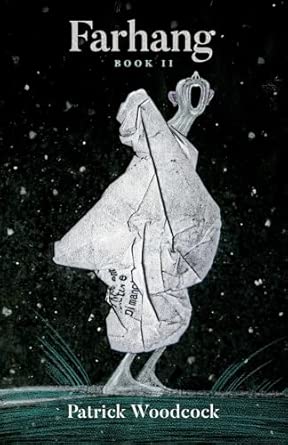
Farhang Book Two
by Patrick Woodcock
ECW Press
October 2026, 136 pages,
ISBN: 978-1-77041-910-0 (Paperback)
ISBN: 978-1-77852-632-9 (ePub)
Patrick Woodcock’s eleventh book of poetry, Farhang Book Two, is an ambitious and deeply immersive collection that continues the emotional and geographical journey begun in Farhang Book One. Though the poems move through more than fifty countries, cultures, and remembered landscapes, the collection was written entirely in Iqaluit, and carries throughout it the atmosphere of northern communities such as Paulatuk, Arctic Bay, and other locations across Nunavut. This Arctic perspective fundamentally alters the book’s movement and tone. Where Farhang Book One often surged outward through travel and immediate experience, Farhang Book Two is more reflective, more haunted by memory, and more conscious of distance, recurrence, and emotional aftermath. The opening section, “Eustress,” continues the story of the figure Farhang, but now the character moves through recollection as much as geography. The result is a collection where oceans, gravel roads, plastic debris, prayer cloths, and frozen bays become part of a single moral and emotional landscape.
One of the collection’s most moving poems is “Lighthouses should not beckon little lungs,” influenced by Woodcock’s experiences working with Baraa Primary School in Tanzania. The poem builds itself through repetition, using the phrase “You believe” as both invocation and lament. What begins with images of “blue water tanks, elephant slides” and “weathered stone fountains” slowly deepens into something much darker and more vulnerable. Woodcock’s strength lies in his refusal to sentimentalize suffering. Instead, he presents small details with devastating clarity: “You believe / arms should be thicker than an umbrella shaft.” The line lands with immense force because it remains restrained. The poem’s imagery of soup steam, broken canes, spilled water, and children’s shoes transforms ordinary objects into symbols of endurance and fragile hope. By the end, the lighthouse of the title becomes something ominous rather than guiding, and the poem closes with the wish that what walks those narrow paths “should never need a lighthouse.” It is humanitarian poetry of the highest order, rooted equally in compassion and observation.
The Arctic presence of the collection becomes central in “Here, even the wish to leave is bound,” written in Iqaluit. This poem captures one of the book’s major themes: the impossibility of truly leaving behind memory, grief, or place. The repetition of “mid” throughout the opening creates a sense of psychological suspension, as though time itself has frozen into Arctic stillness: “when midlife flings memories / midair at midday, leave this.” The command to leave repeats again and again, but each attempt at escape collapses beneath the weight of recurrence. Woodcock’s imagery of “inoperable water,” “unpotable water,” and “the untroubled ice” gives the landscape an almost spiritual authority over the Farhang Book Two Patrick Woodcock speaker. The poem’s defining lines arrive near the end: “Nothing leaves this. Everything / that tries is tide torn and returned, / like boats, like ballast.” Here, the Arctic is not merely setting. It becomes a force that reshapes identity itself. The frozen bay and shifting tide become metaphors for emotional return, reminding the reader that memory cannot simply be abandoned or outrun.
In “The ocean swells with the silence of its library,” Woodcock transforms the Arctic Ocean into a vast archive of hidden histories and submerged voices. The poem’s central metaphor is brilliantly sustained from beginning to end. The sea becomes literature itself: “The gale tears open the ocean’s tale, / wave upon wave, page by page.” This image allows Woodcock to fuse natural force with acts of reading, revision, and historical excavation. Ice arrives “to erase it all,” while the bay appears restless beneath confinement, as though struggling to preserve the stories buried within it. What makes the poem extraordinary is the way it links the Arctic landscape to acts of remembering and salvaging. The ocean “shelves too much, leaves too much buried, / agonies and argosies to be salvaged.” The line captures the immense emotional and historical pressure carried throughout the collection. Beneath the frozen surface are wars, migrations, losses, and forgotten lives. Woodcock suggests that poetry itself becomes a form of diving beneath those waters, retrieving what history has allowed to sink.
In another poem, “A plastic bag trembles like a prayer left in Kurdistan,” the image of a plastic bag wrapping around the speaker’s ankle opens outward into memories of Kurdistan, where cloth prayers tied to branches moved in mountain winds. Woodcock’s ability to connect industrial waste, war, spirituality, and memory within a single lyrical movement is remarkable. The image of “a small tree, bound with silken fabric” becomes both sacred and fragile, while the “panicked pleas” carried by the wind suggest prayers unable to escape history or violence. The poem’s conclusion is devastating in its restraint: “When the planes appeared, / some prayers intertwined, one last embrace / before it landed.” Woodcock never explains the emotional weight of the image. He trusts the reader to feel its terror and tenderness simultaneously. The poem demonstrates the extraordinary reach of his poetic imagination, where even a discarded plastic bag can carry echoes of conflict, displacement, and human longing across continents.
What makes Farhang Book Two such a powerful achievement is the way it unites global experience with the emotional terrain of Nunavut and the Arctic. Every remembered country and conflict passes through the stillness and isolation of the North before reaching the page. The result is a collection where geography becomes inseparable from psychology, and where memory itself behaves like tidewater beneath ice: shifting, returning, impossible to contain. Patrick Woodcock has written a book of remarkable scope, intelligence, and emotional depth. Farhang Book Two confirms him as one of the most distinctive poetic voices currently working in Canadian literature.