 Some ideologies have little use for such sentiments, but Garner’s new collection hearkens back to themes that came across even more powerfully in the work of Australia’s first Nobel laureate in literature, Patrick White, who contrasted the sedate, not to say dysfunctional, existence of wealthy suburban Sydneysiders with the bold, tough character of explorers who set off into the Outback to grapple with life on the most elemental level, without concern for fashionable dogmas, changing mores, or social acceptance.
Tag: fiction
A review of An Impossibility of Crows by Kirsten Kaschock
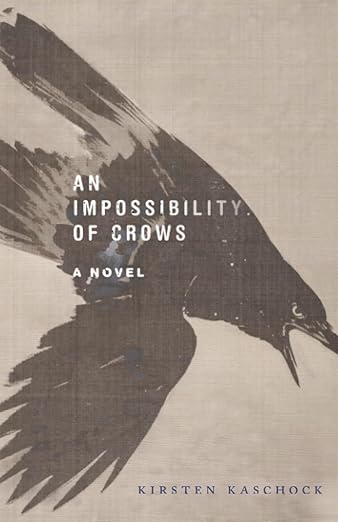 An Impossibility of Crows by Kirsten Kaschock soaks fully in the chill waters of death and loss, the palimpsest of memories overwriting what we once knew. It’s rare that an adult can retain, not merely memories of, but the actual feeling of being a child. Orwell, writing about Dickens, spoke to the difficulty for novelists in doing so.
A review of A Single Witness by Christine Balint
 A Single Witness is based on a true story in which a man is convicted of raping his daughter and sentenced to hard labor. But it’s not quite as simple as that in the novel. Anna Maria hardly comes out of it as a “winner.” Christine Balint develops the story from the scant historical record. There are no winners; there may not even be any “justice.”
A review of Madelaine Before the Dawn by Sandrine Collette
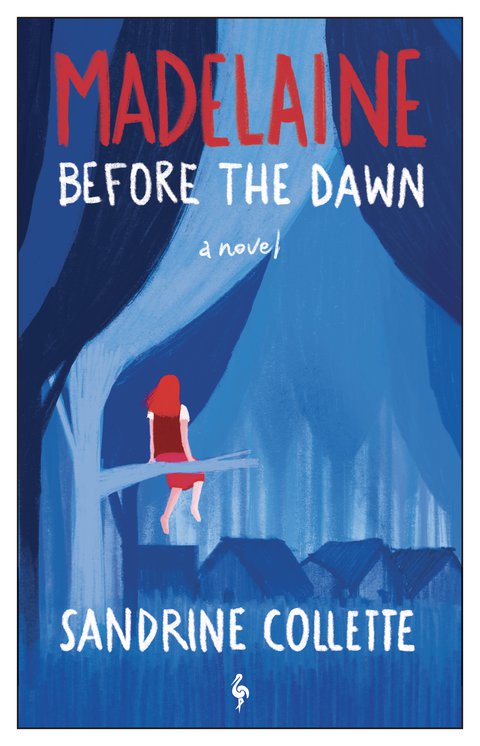 The plot is simple, but in Collette’s hands, and Anderson’s translation, the prose soars, delivering shimmering men, women and children caught in a never-ending cycle of labor in fields. Hope rises and falls. And while love is a luxury, it’s as seeded in the novel as the seeds the farmers plant in their fields.
A review of The Grief Shop and Other Stories from a Broken World by Alex DiFrancesco
 The book focuses on what could be considered the walking wounded, if it weren’t for their respective nuances and depth, along with surprising turns of humor. The stories are marked by the shadow of a singular, mostly unspoken, ‘tragedy’; however, the collection notably avoids the trap of victimization despite the cataclysmic proportions of its world.
A review of Tangerinn by Emanuela Anechoum
 It may take readers a moment to adjust to that narrative form, but the immediacy it provides is worth it. It’s a history and a conversation, the kind where you leave what was behind and move into the present state of what is. Interior reckoning goes a long way and is itself a form of migration, maybe even another form of death in the father’s and daughter’s struggle to align identity with a self in a foreign land.
A review of The Meaning of Fear by Laura Hulthen Thomas
 The Meaning of Fear is not an easy novel, but it is a necessary one, particularly in today’s world. Readers will find a lot to unpack here and, without a doubt, gain insight into the ramifications of abuse. At the same time, fans of suspense are in for an adrenaline-charged ride, penned by a top-notch storyteller.
A review of But Where’s Home: A Novella and Stories by Toni Ann Johnson
 Johnson’s writing–her vivid detail, sharp dialogue and insightful, deftly witty scenes–reveal a family of distinct, complicated individuals grappling with the internal and external impact of our society’s stereotypes, but also asks us to look more closely at our own relationships.
A review of Radegonde and the First Crusade by Lauren Small
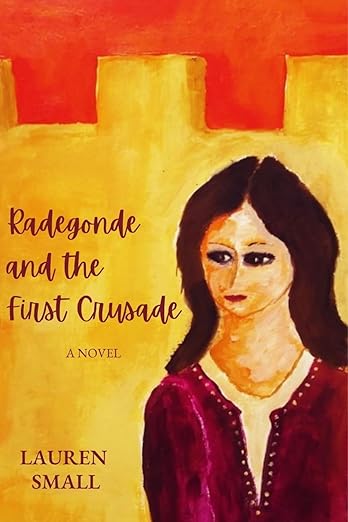 Radegonde and the First Crusade spans four years from the time Radegonde leaves home to the bloody conclusion of the novel. Lauren Small vividly brings the time to life while spinning a tale of one young woman’s struggle with faith. At the Council of Clermont at the end of 1095, Pope Urban II issued a call to arms that would result in the first crusade – the People’s Crusade – and the capture of Jerusalem, liberating the holy city from Muslim control. Related in the present tense by an omniscient third-person narrator, the story focuses on Radegonde, both her interior struggles with faith and sin, forgiveness and love, and the outward challenges she faces.
A review of The Cross Thieves by Alan Fyfe
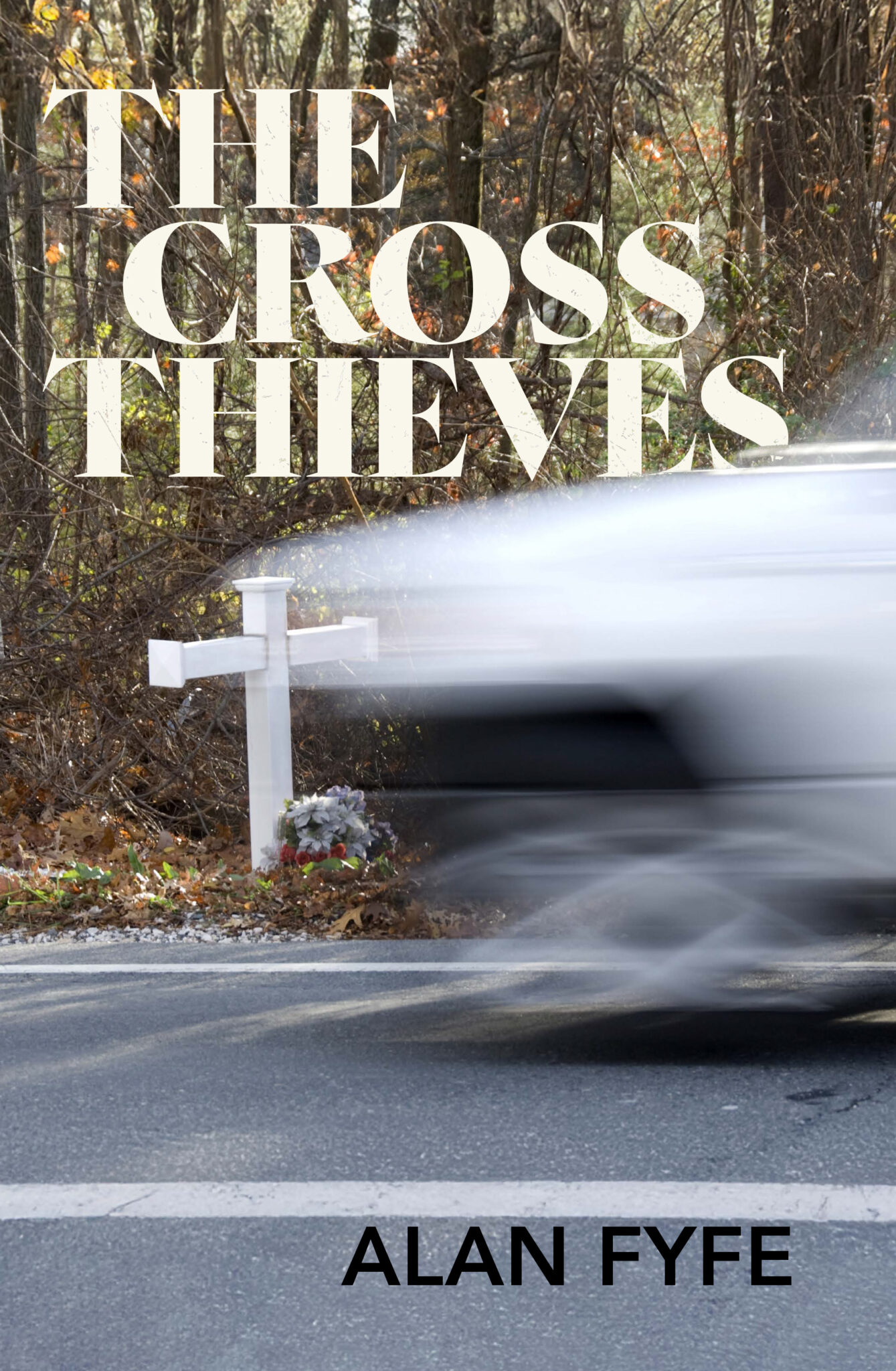 The book is full of beautiful, funny, often tragic contradictions that are so well woven into the fast-paced plot that at times you have to force yourself to slow down to appreciate them. The Cross Thieves is a terrific book, full of gritty violence and desperate characters, but also infused with a tenderness that borders on transformative.