 Moving from present to past with slim reflective passages, the novel examines more than individual responses to violence; it investigates cultural dissonance and our innate need to place blame on ourselves or the other, whoever that may be, and sometimes it’s us in an earlier life. A powerful examination of memory, resilience, reckoning, and acceptance, Di Pietrantonio’s novel marries fact with fiction to create a novel driven by secrets that must be relinquished and failings that must be acknowledged. It’s about honesty and truth.
Author:
A review of Ferryman: The life and deathwork of Ephraim Finch by Katia Ariel
 Ephraim’s own journey to self-discovery is itself a terrific story, but what really makes Ferryman stand out is the silky, almost surreal quality of Katia Ariel’s writing. Ariel leans into the complexity of biography, its subjectivity, the interpretations perspectives, and gaps, to create a delicate and complex portrait that feels true precisely because it doesn’t connect every dot.
A review of Elis – Irish Call Girl by Anna Rajmon
 Rajmon is as sharp and thoughtful as she is hilarious – in telling her story, she misses nothing regarding her experience. The picture she paints of the Irish prostitution scene is a comprehensive and complex one – from how accommodation is obtained, to how advertising is organized, to how meetings are arranged, to how travel from location to location is organized, to the power dynamics between sex workers, ‘clients’ and ‘agencies’ (‘pimps’ would be a more accurate term) – Rajmon lays it all out in black-and-white.
A Thousand Splendid Suns: A Multigeneration Story Unlike Pachinko or One Hundred Years of Solitude
 Although traditional readers might classify the 2007 work as historical fiction given its backdrop of the Soviet-Afghan war in Kabul, the work is anything but your run-of-the-mill war novel. Through a mother-daughter story that focuses neither on a mother nor on her successive kin, Hosseini crafts a compelling narrative spanning generations that makes you question everything you thought you knew about a multigenerational (multigen) story.
A review of Unruly Tree by Leslie Ullman
 And only a poet blessed with imagination and a solid understanding of poetics could embark on a project such as Leslie Ullman has devised here. Using “Oblique Strategies” as a basis for a disciplined exploration of the boundless possibilities of creative interpretation, she has produced a series of informed, entertaining and highly individual poems.
A review of Exit Zero by Marie-Helene Bertino
 This is no ordinary collection. The Bertino omnibus features a Guignol-esque cast of characters readers will readily recognize because, flights of abstruse and absurd fancy aside, they abide and strive, hungry ducklings all, within each of us.
Maya in the Zen Forest: A review of The Forest I Know By Kala Ramesh
 The “forest” of the forest i know is essentially a metaphorical Zen forest where the poet learns life’s trust as well as its tedium. She humorously notes the many gurus along herpath and their lack of utility in her enlightenment. In Zen, a master is not necessary to experience satori, which is a sudden realization into the human experience. In this practice, the master pulls punches and jokes to encourage enlightenment.
A Paradise Within Thee: A Review of Happier Far by Diane Mehta
 Mehta’s mind thinks in music. We understand this musical schema because of Mehta’s mother, who took her to the symphony when she was a child. Mehta describes the feeling she had after the concert, “by the time I returned to our night-sky driveway I would have violins and trumpets in my bones” (46). Currently, Mehta is the poet-in-residence at New Chamber Ballet. Knowing this conjures up a sweet sensation, like the taste of honey on the tongue.
New giveaway!
 We have a copy of Tiny Vices by Linda Dahl to give away!
To win, sign up for our Free Newsletter on the right-hand side of the site and enter via the newsletter. Winner will be chosen by the end of July from subscribers who enter via the newsletter. Good luck!
A review of The Pull of the Moon by Pip Smith
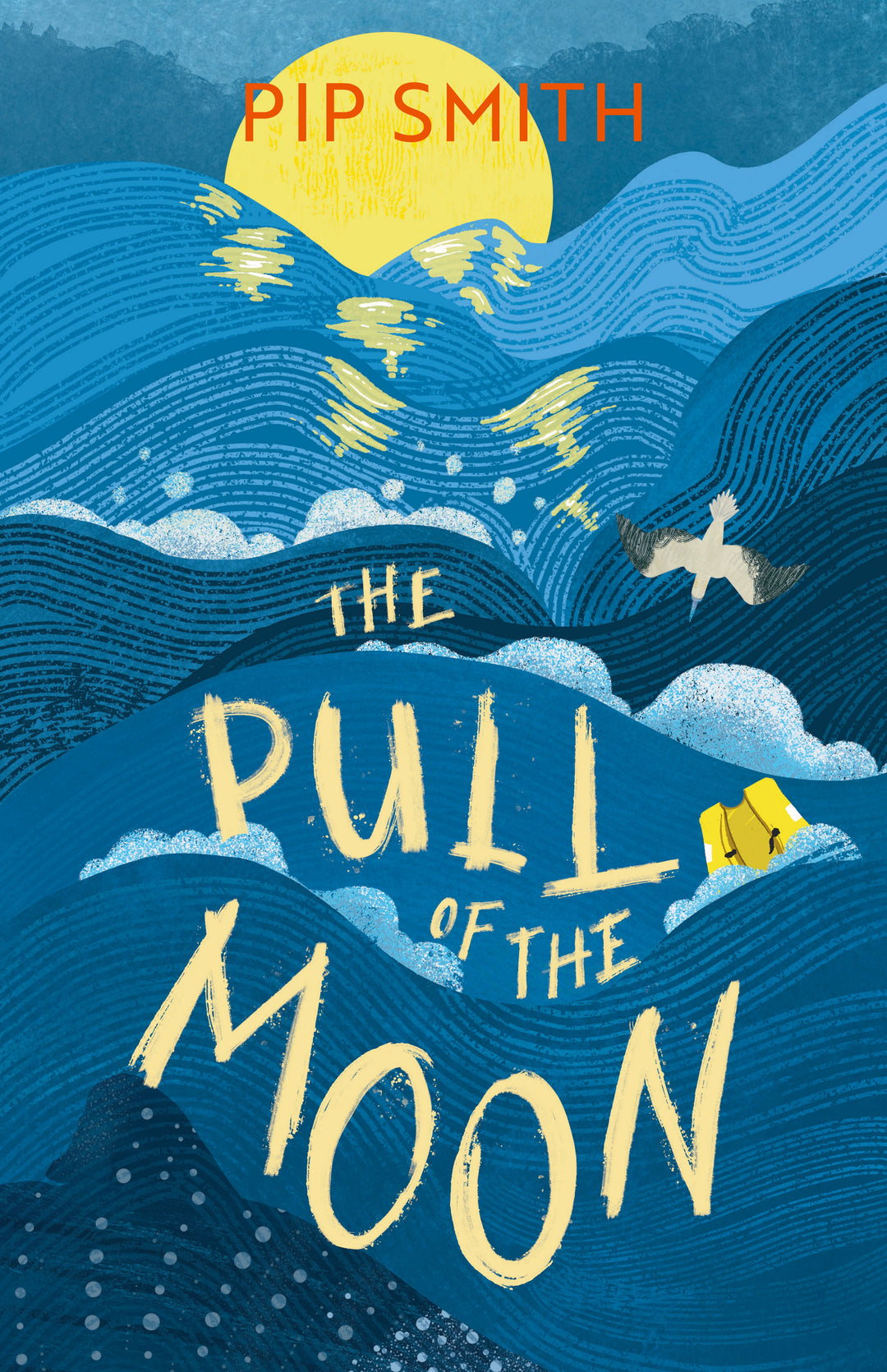 There is a magical quality to the island and the sounds, with all of its seasonal and tonal changes – the turtle and crab hatchings and migrations, the moon phases that make up the section headings, and the way in which the perspectives move around the island. Smith’s writing is poetic and she doesn’t tie everything up into a neat parcel. Instead she allows the characters to develop against the backdrop of an unfolding crisis that is very much a real one in our world.